
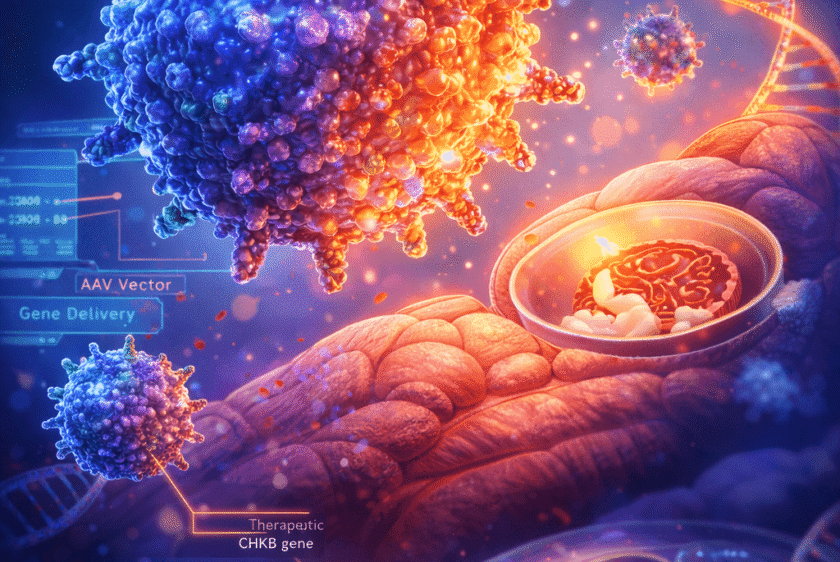
Adeno-associated virus (AAV) vectors have become the backbone of gene therapy development for neuromuscular disorders, yet challenges remain — especially for diseases requiring large or complex genes. Recent work in AAV engineering is helping overcome these barriers, creating realistic opportunities to address a broader spectrum of muscular dystrophies.
Research covered in this publication highlights several key advances:
Dual AAV delivery systems capable of delivering larger transgenes through in-cell recombination
Enhanced capsid engineering for skeletal, cardiac, and CNS targeting
Reduced immunogenicity designs for improved tolerability
Optimized promoter selection to drive expression only in relevant tissues
These innovations align directly with therapeutic needs for conditions such as CHKB-related dystrophy, where multiple organ systems — including skeletal muscle, cardiac muscle, and CNS — must be targeted effectively.
The continued evolution of AAV platforms reinforces the feasibility and urgency of developing tailored gene replacement therapies, such as HaliGene’s HG-001 program.
Learn more about how platform-level innovation strengthens our ability to develop transformative therapies for ultra-rare neuromuscular diseases.